Viralterkini.id – If you think beauty standards are just current trends, from skincare, makeup to body goals, it turns out that the Ancient Egyptians had been thinking about them for thousands of years.
This civilization is even known as one that cares most about appearance. They have been making perfume, body oil and various beauty treatments long before the modern beauty industry emerged. For the people of Ancient Egypt, looking attractive was not just a matter of style, but also part of their culture.
The words “Beauty in Ancient Egypt
In Ancient Egyptian language, there are two terms that are often used to describe something beautiful, namely “N” And “nfr“These two words are the basis for many terms related to the concept of beauty.
For example, the word “fruit” was used to refer to a beautiful young woman who had never given birth. Some modern historians even translate it as teenage girl. Meanwhile, the term “nfrw” is used to refer to teenage boyI.

Beauty Is Synonymous with Youth
In many Ancient Egyptian paintings and sculptures, young women are usually depicted with slender bodies and well-proportioned silhouettes. This body shape is considered the ideal standard of beauty.
Almost the same thing also applies to men. However, in Egyptian art, depictions of aging men are usually more subtle. Interestingly, Pharaohs are sometimes depicted as elderly men after death, to emphasize the impression of wisdom and experience.
Men’s Beauty Standards
There is one fact that may be quite surprising—the people of Ancient Egypt considered beards and mustaches to be something not clean. Because of this, many men choose to shave their faces to look neat and attractive.
In fact, some men also shave real hair them and use wigs or false hair.
In various works of Ancient Egyptian art, men with red skin or reddish brown is often considered to have ideal skin. Besides, men are built slim usually considered more attractive than big (fat) men.
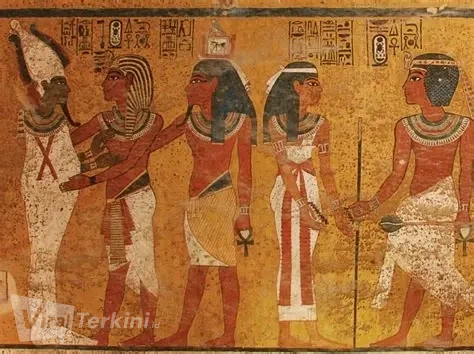
Even so, important figures or powerful people are often depicted as having strong bodies with well-trained muscles. One thing that is also very important in the Ancient Egyptian concept of beauty is symmetryboth on the face and body.
Women’s Beauty Standards
Just like men, body hair on women is also frowned upon. However, the wigs worn by women are usually much more elaborate, long and decorative than those of men.
Another interesting difference is in skin color. If men are considered handsome with reddish or brown skin, then women who are considered beautiful actually have colored skin That does not or pale golden.
This is also related to social status. Women from wealthy families stayed indoors more often so their skin remained light, while darker skin was often associated with working class women who were outdoors more often.
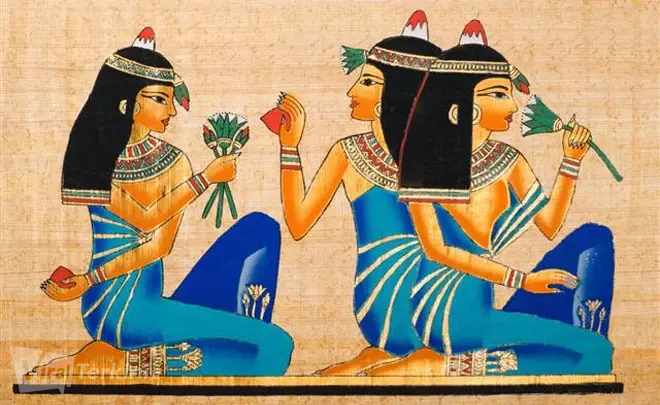
It is not surprising that in the art and writings of Ancient Egypt, female beauty was discussed much more often than male beauty. In fact, in some writings, the charm of women is described as having a divine aroma like divine perfume.
Nefertiti: The Beauty of Ancient Egypt
When talking about the beauty of Ancient Egypt, the name Queen Nefertiti almost always comes up.
She is known as one of the most beautiful women in the history of the ancient world. In various statues and writings, Nefertiti’s face is depicted as very symmetrical, something which is still considered to be an ideal form of beauty.
But unfortunately, many people today know Nefertiti more for her beauty than for her contribution to Egyptian history. In fact, the name itself means “The Beautiful Woman has Arrived“
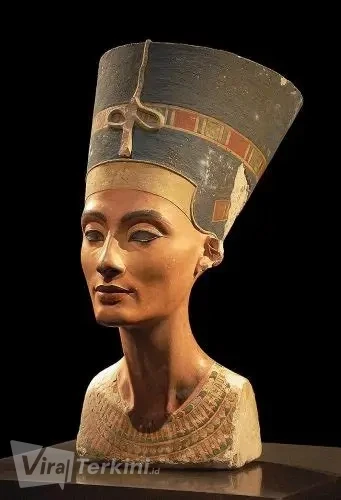
This shows how much value Ancient Egyptian society placed on physical appearance and the concept of beauty. (rby)
Source: How ancient Egypt shaped our ideas about beauty Inclusive Beauty Ancient Egyptian Society — Cosmetic Classicists in the Ancient World – World History Encyclopedia Men’s Beauty Rituals in Ancient Egypt – Beauty health
PakarPBN
A Private Blog Network (PBN) is a collection of websites that are controlled by a single individual or organization and used primarily to build backlinks to a “money site” in order to influence its ranking in search engines such as Google. The core idea behind a PBN is based on the importance of backlinks in Google’s ranking algorithm. Since Google views backlinks as signals of authority and trust, some website owners attempt to artificially create these signals through a controlled network of sites.
In a typical PBN setup, the owner acquires expired or aged domains that already have existing authority, backlinks, and history. These domains are rebuilt with new content and hosted separately, often using different IP addresses, hosting providers, themes, and ownership details to make them appear unrelated. Within the content published on these sites, links are strategically placed that point to the main website the owner wants to rank higher. By doing this, the owner attempts to pass link equity (also known as “link juice”) from the PBN sites to the target website.
The purpose of a PBN is to give the impression that the target website is naturally earning links from multiple independent sources. If done effectively, this can temporarily improve keyword rankings, increase organic visibility, and drive more traffic from search results.
Comments are closed, but trackbacks and pingbacks are open.