Viralterkini.id, WEDA,– The Government of Central Halmahera Regency, North Maluku, confirms its commitment to dealing with the climate crisis by promoting real community-based action. The commemoration of World Environment Day 2026, which falls on Friday (5/6/2026), is a momentum for the region to reduce the impact of environmental degradation amidst rapid industrial development in the local area.

The commemoration, which is centered on Kuleyevo Square, Veda City, carries the national theme “Time to Work for Climate”. The series of activities began with a joint roll call which was attended by elements of the Regional Leadership Coordination Forum (Forkopimda), ranks of the state civil apparatus (ASN), as well as elements of society.
In the written remarks of the Regent of Central Halmahera, Ikram Malan Sangadji, which was read by Assistant I for Government and People’s Welfare, Dr. Lasamida Kurupunda, emphasized that this year’s commemoration is not just a ceremony.
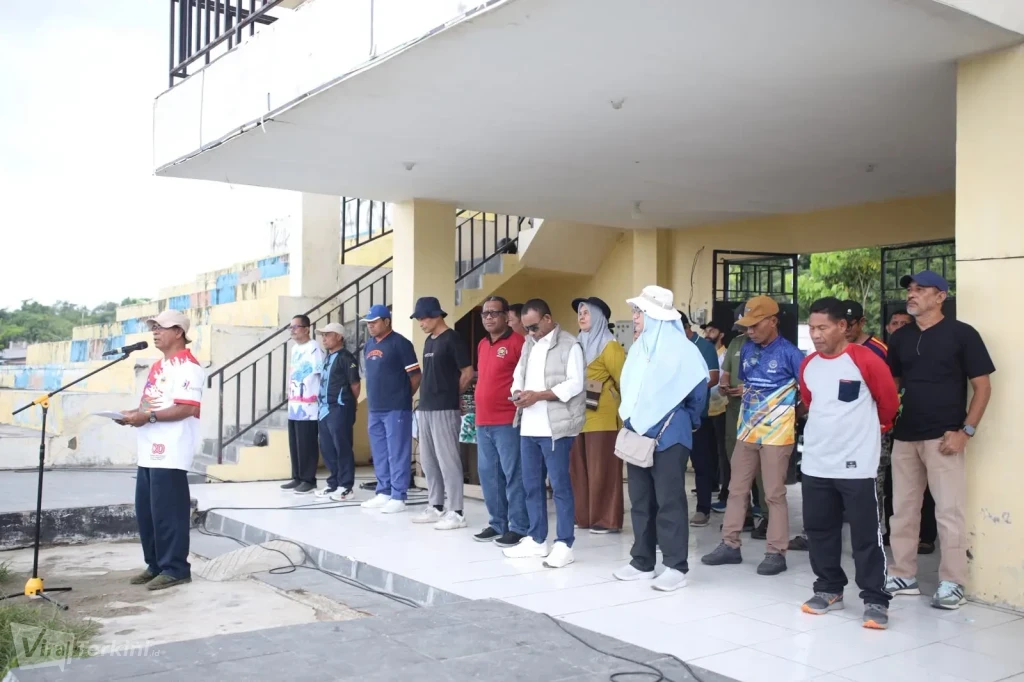
The Regent highlighted the urgency of dealing with climate impacts which are now being felt directly by the residents of Central Halmahera.
“The flooding incident that hit a number of areas in Weda District and the increasing volume of waste is an alarm for all of us. This is no longer the time to discourse about the environment, but rather the time to work really for the climate,” said Lasamida when delivering the Regent’s speech.
Local Action Based Mitigation
The Central Halmahera Regency Government is aware that the ecological challenges in its region are quite complex, especially with massive mining activities and nickel downstreaming which have triggered a surge in population and public consumption. Therefore, the District Government invites residents to take mitigation steps from the smallest scale.
These steps include sorting waste from its source, drastically reducing the use of single-use plastic, and maintaining water channels to prevent blockages that trigger floods.
Head of the Central Halmahera Regency Environmental Service, Rivani A. Rajak, added that the region’s long-term strategy will focus on strengthening collective awareness.
According to him, ecosystem restoration must become part of people’s daily lifestyle.
“A clean and healthy environment is an investment for future generations. We want to raise awareness that small actions, if carried out consistently and massively by the entire community, will have a big impact on the climate resilience of our region,” explained Rivani.
Symbolism of Greening and Clean Cities
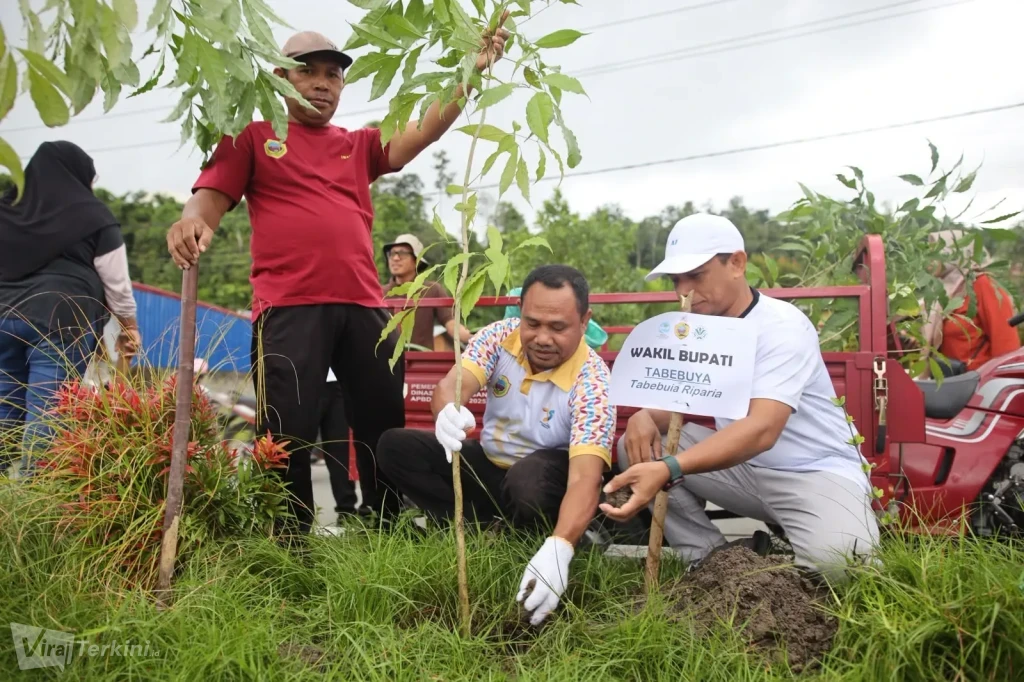
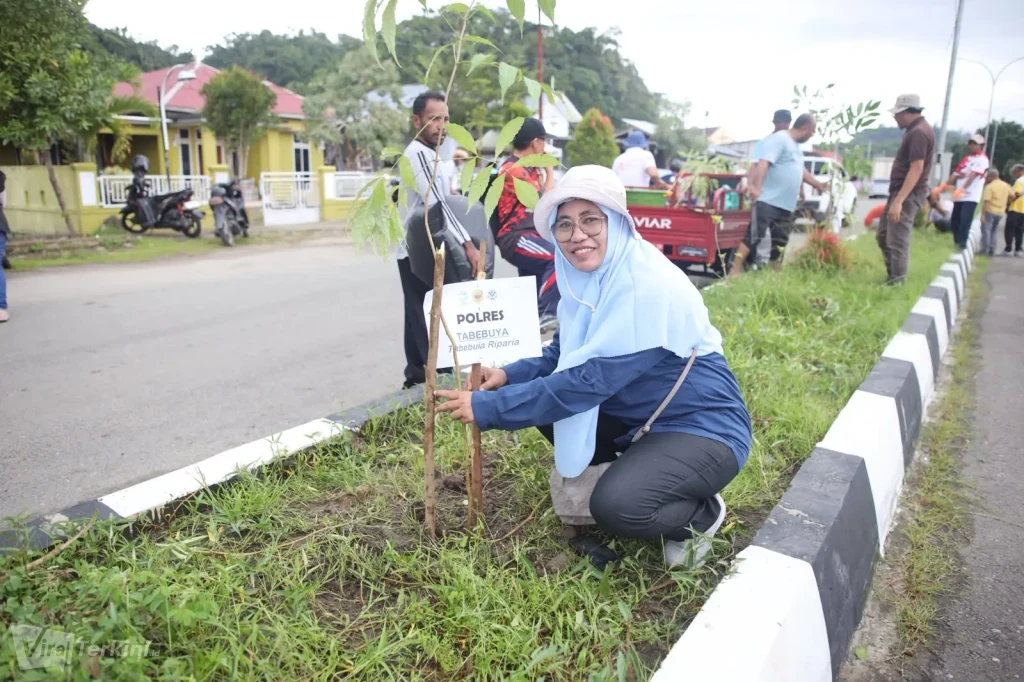
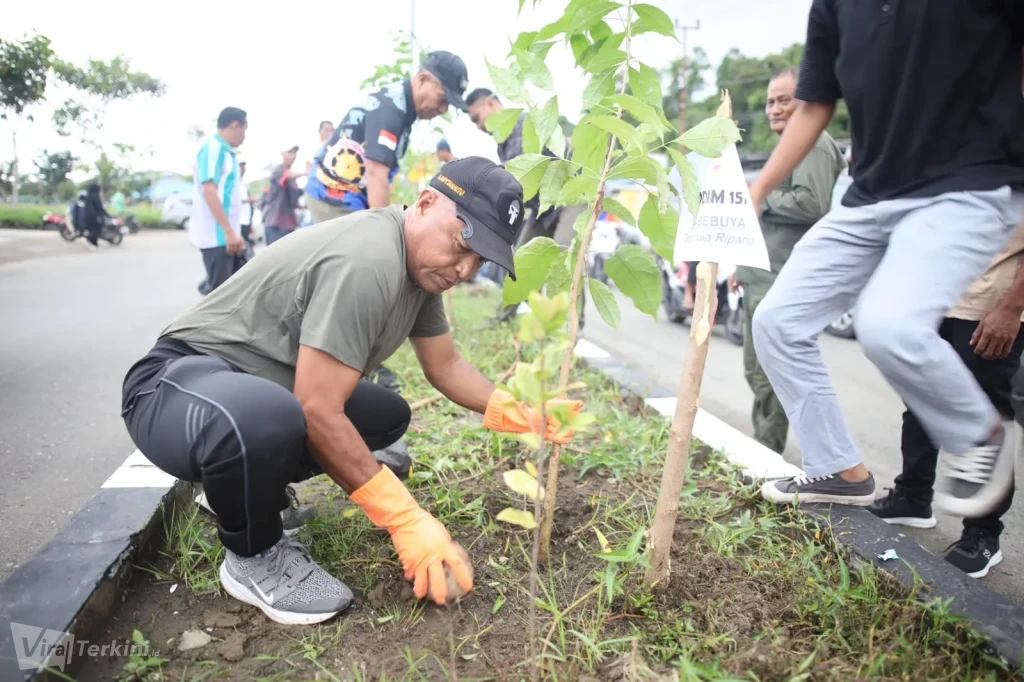
As a concrete manifestation of conservation commitment, the series of commemorations closed with the Tabebuia tree planting action (Tabebuia river bank) in the Veda City area. The symbolic planting was carried out by regional officials and elements of Forkopimda.
The choice of Tabebuia tree is not without reason. This plant is known to have good resilience as well as aesthetic and ecological functions that are capable of absorbing air pollutants, as well as contributing to the city’s green open space (RTH).
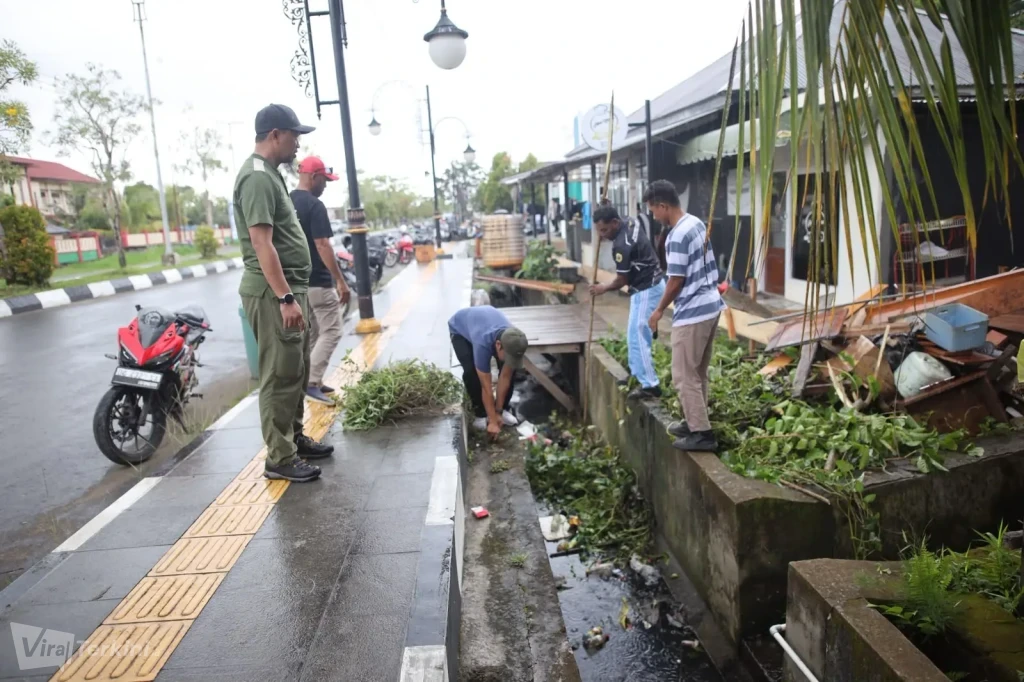
After planting, the activity continued with simultaneous environmental clean-up actions along the main route and residential areas of Weda City.
This action involves synergy between ASN, local communities and various related sectors to collect rubbish and ensure that city drainage functions optimally.
Sustainable Development Challenges
This move by the Central Halmahera Regency Government has received attention because of its position as one of the epicenters of the national nickel industry.
This year’s commemoration of World Environment Day at Weda is a portrait of regional governments’ efforts to balance the demands of economic growth and the obligation to maintain the carrying capacity of the environment.
Through this movement, the Central Halmahera Regency Government hopes that the spirit of mutual cooperation among residents can continue to be maintained, in order to create a clean, healthy and sustainable regional ecosystem in the future. (Red)
PakarPBN
A Private Blog Network (PBN) is a collection of websites that are controlled by a single individual or organization and used primarily to build backlinks to a “money site” in order to influence its ranking in search engines such as Google. The core idea behind a PBN is based on the importance of backlinks in Google’s ranking algorithm. Since Google views backlinks as signals of authority and trust, some website owners attempt to artificially create these signals through a controlled network of sites.
In a typical PBN setup, the owner acquires expired or aged domains that already have existing authority, backlinks, and history. These domains are rebuilt with new content and hosted separately, often using different IP addresses, hosting providers, themes, and ownership details to make them appear unrelated. Within the content published on these sites, links are strategically placed that point to the main website the owner wants to rank higher. By doing this, the owner attempts to pass link equity (also known as “link juice”) from the PBN sites to the target website.
The purpose of a PBN is to give the impression that the target website is naturally earning links from multiple independent sources. If done effectively, this can temporarily improve keyword rankings, increase organic visibility, and drive more traffic from search results.
Comments are closed, but trackbacks and pingbacks are open.